Literarisches Events (in and around Lawrence KS)

  • PATRICIA LOCKWOOD. Lawrence. Thursday, September 11, 7:00 p.m., Spooner Hall, KU Campus.
  • PATRICIA LOCKWOOD. Lawrence. Friday, September 19, 7:00 p.m. Lawrence Public Library. Sponsored by Raven Bookstore.
  • DENNIS ETZEL, JR. & RACHEL CROSS. Lawrence. Thursday, September 25, 7:00 p.m., Raven Bookstore, 6 E. 7th St.
  • TONY TRIGILIO. Lawrence. Thursday, Oct. 2, 4:00 p.m., English Room, Kansas Union, KU Campus. FREE.
  • CALEB PUCKETT & JUSTIN RUNGE. Lawrence. Thursday, October 16, 7:00 p.m., Raven Bookstore, 6 E. 7th St.
  • BEN LERNER. Kansas City, MO. Thursday, October 23, 7:00 p.m., Epperson Auditorium, Vanderslice Hall on the KCAI campus, 4415 Warwick Blvd.
  • KRISTIN LOCKRIDGE & ROBERT DAY. Lawrence. Thursday, December 4, 7:00 p.m., Raven Bookstore, 6 E. 7th St.

Sunday, June 20, 2010

The Case Against Courtesy

Academic politics is not electoral politics. It is court politics.

The term “professional courtesy” can be taken two ways. If taken ironically, we are returned to the original meaning of courtesie: that is, the manner in which professional courtiers behaved at the Court of the monarch. They bowed and simpered at one another, danced rondels with each other, spoke lovely, flowery words to one another, all the time scheming about how to stab each other in the back. When the king or queen was around, they did not say crude things like “Why, Your Majesty, that fellow’s plotting against you – you shouldn't trust him any farther than you can throw him!” No, no, no. They dropped hints. They circumlocuted. They made passing references designed to pique the interest (or fear) of the ruler. They told half-truths, raised eyebrows, exchanged glances. And next thing you know, somebody got their head chopped off, and nobody could understand why. And then you had a war. That’s “professional courtesy” for you.

This is, of course, the opposite of democratic politics – indeed, it’s why the latter was invented. That which is courteous is by definition the opposite of demotic: these categories are defined over-against one another. Those to the manor born are not part of the rabble in the street. Likewise, the lace knickers (and garrotes) of the Court are not the rags (and brickbats) of the street. But a democratic regime is designed precisely to allow for conflict that can have an outcome other than bloodshed. It is, for that reason, often verbally rough-and-tumble. People say inflammatory, even scurrilous things; and usually there’s an equal and opposite reaction, if it’s done clumsily.

But the point is not to eliminate conflict. The point is (as Chantal Mouffe puts it) to replace antagonism with agonism. Antagonism means brickbats (or civil war). Agonism means skillful rhetoric; forming alliances (ex. political parties); placing pressure at vulnerable points by presenting the right information at the right time to large groups or individuals. It means using the public (in all its senses) to attain political and social ends.

This is a big part of “civility.” “Civility” is the way that citizens are supposed to behave in civil society (i.e., the civitas, the city). That way is different than courtesy. A civilian citizen can (and indeed should) publically express dissatisfaction; openly form political networks; even tell people exactly what s/he thinks of the opponent. Caning your colleagues on the Senate floor is uncivil. But denouncing them for their policies or methods is not.

It is, however, the height of discourtesy. It is the manner of the court to maintain the façade of tranquility, stability, harmony – because that is how the monarch (the state) wishes to be seen. Conflict amongst the courtiers = conflict in the state. If l’etat c’est moi, then chez moi had better look pretty damn placid. Needless to say it’s not in fact – it’s just breeding conspiracies.

The problem in the US academy (and indeed, in US culture generally) is that its denizens confuse civility with courtesy. The belief seems to be that one is either courteous or one is uncivil. You are either minueting or you are caning somebody. Either you’re sitting with your hands folded in your lap like Pollyanna, or there’s the danger that, at any moment, you’ll start screaming at the top of your lungs (and, indeed, it's a culture that breeds such polarized responses). You’d think otherwise smart people (some of them are even historians of the absolutist state, or public-sphere theorists) would recognize this kind of “category creep.” But not so.

However, it is precisely because everyone is expected to sit quietly with hands in lap that they end up whacking each other. The repressed returns. People mistake conflict for violence and try to quash it. Everybody’s going to get along just fine. And, of course, this is how things had to be at Court.

But Members of Congress from different parties can denounce each other’s policies (and sometimes each other) on the floor, and then go out for drinks afterwards and kid each other about it. Why aren’t they caning each other instead? Because the conflict is already in the open, within the space of the legislature. They know and acknowledge that they have different political philosophies and aims, and sometimes they can leave them at the office. They are colleagues, and they are not on the same side.

What if we had political parties amongst faculty? There are certainly differing interests: between multiculturalists and cultural conservatives; between sciences and humanities; between those who make a lot of money and those who make less; between those who believe in top-down control and those who believe in power-sharing. But to lobby your colleagues openly about a particular policy; or to address such conflicts directly in a departmental meeting or faculty senate is considered unbecoming – unprofessional – dangerous to the body (not to mention one’s career). It does not evince Professional Courtesy. And people are surprised that we have the simultaneous simpering and backstabbing that characterize so many departments – or departments that seem to be getting along just fine until they suddenly disintegrate into lawsuits, defections, and receivership.

So, the model of the professional academic is in some ways the model of the professional courtier: the one who can gain the ear of the chief – and who can keep a plot secret – while making everyone think that nothing is going on. Maybe this is a legacy of the origins of the university as an outgrowth of the monarchy (which is why we have boards of “regents”). Maybe academics like to think of their departments as one, big, happy family, instead of a sometimes-agonistic polis.

I wouldn’t argue for political parties (not necessarily) in English departments. But what if it were OK to (for instance) approach a colleague and say, “I really don’t like the way Jane is handling the department. I know for a fact that she’s lied to my face. And I’d like you to sign this petition to ask her to step down.” This direct approach is very honest; it is, indeed, civil, in the truest sense of the word. It is how a citizen should conduct herself. But to do so within the culture of academia is considered – well, if not treasonous, then certainly discourteous. And, since we mistake courtesy for civility, it is termed (inaccurately) as “uncivil” – when precisely the opposite is the case. Maintaining “a culture of civility” thus becomes, effectively, maintaining the status quo – which was precisely the function of courtesie.

Perhaps this is all another way of acknowledging that the university is not a republic. “Shared governance” is not the same thing as shop democracy. In part, that’s because of the hierarchy (those regents and all). But in part, it’s because the faculty have internalized the ethos of the hierarchy. We are all professionally courteous.

Monday, May 3, 2010

"I'll Show You the Life of the Mind!"

I've been discreetly "waved off" trying to educate our grad students on just how much worse the academic job market in the humanities is now than it was two years ago (waved off via third-party back-channels: "Hey, Mister - can't you see you're scarin' the kids??").

So it is with great interest that I read James Mulholland's essay "Neither a Trap Nor a Lie," in the March 12 issue of the Chronicle of Higher Education (pp. A 38+). Mulholland is arguing against "Thomas H. Benton," whose relentlessly debunking articles I have (in the past) sent out or linked to. Mulholland writes that "I am arguing here for the life of the mind, or," as he is quick to add, "at least a version of it." As the article goes on, that life starts to look more and more pallid.

He's starting from the premise that, unlike us naive greenhorns of yore, "Most graduate students now understand how dire [the job market] is, while still attempting, perhaps with incomplete information, to weigh the risks" (?!? - italics mine)

Uh, now, I'm not a rational-choice theorist, but even I will insist upon the importance of information - lots of it - for assessing risk. And he's right, people who apply to - and stay in - graduate school need it. Boy do they. And they usually don't get it (sometimes through no fault of their own).

I do think that our grad students have a good sense of how dire the job market was when they entered graduate school - but not necessarily how much worse it has become since then. This is true even for those who entered last year.

I've been insisting that our graduate students consider a "Plan B" - that is, What will you do if you don't land a sweet tenure-track assistant professorship at a solvent institution of higher ed. - one that will allow you to begin a lifetime of paying off interest on debts? That Plan may be "go into administration" or "publishing" or "NGOs" - or maybe "be a penurious adjunct for the rest of my life" or "move from one temporary visiting position to another," but if you don't have a plan for the future, the future will plan you. And the future, left to its own devices, is nasty, brutish, and neoliberal.  In any event, it seems to me that this kind of hard-headed contingency planning and facing up to the facts is what any rational individual should be doing - not least of all right now. [Indeed, those of us who are tenured faculty should also be thinking about a Plan B! - speaking of avoidance . . .  (Mind you, I think one should also be prepared for success. This is at least as big a blind spot for grad students.)]

So, it's interesting to me that, in this high-minded and principled response to Benton, Mulholland ends up presenting the same gloomy assessment of the market that Benton does. And he ends on a somewhat utopian note - not unlike Benton's article "Dodging the Anvil":

“We – adjuncts, full-time professors, researchers, administrators, politicians, and parents – must retool how we talk about graduate school in the humanities. [When did a politician talk about graduate school in the humanities?] We can no longer present it as a professional school or as career training, with the assumption that more education and advanced degrees always lead to better lives, more income, increased happiness. Instead, we must think of graduate school as more like choosing to go to New York to become a painter or deciding to travel to Hollywood to become an actor. Those arts-based careers have always married hope and desperation into a tense relationship. We must admit that the humanities, now, is that way, too."

Of course, Benton has said as much, in as many words, on more than one occasion. So, whether you are championing humanities grad school as the life of the mind, or declaring it (like Benton) a "trap and a lie," you end up with the same rather desperate utopianism: that the only reason to pursue it is for its own sake. That conclusion seems entirely just. However, if you want to eat, you'd better have a separate source of income.

Thursday, April 29, 2010

"American Hybrid," Cold-War Style

“The current battle of ‘obscurity’ versus ‘clarity’ (or of ‘to be’ versus ‘to mean’) tends to divide poets into two extremes equally deadly to poetry. The first extreme, in the name of anti-philistinism, is for cross-word-puzzle poetry which, whatever its fascination, would kill poetry by scaring away its audience. The second extreme, in the name of communication, would demagogically popularize poetry, in betrayal of all integrity of standards, until it reaches the widest but also lowest common denominator and is no longer poetry at all, but verse. The first group would sterilize the muse. The second group would prostitute her.

“Is there not third possibility for the curious craftsman? Must he become either précieux or ‘corny,’ either Babbitt Junior or Babbitt Senior?

“The answer is: an act of creative faith in a new and third force in poetry, already emerging, equally remote from the muse’s mincing sterilizers and back-slapping salesmen. Such a third force must prefer a difficult simplicity to an easy obscurity. It must return to the function of ethical responsibility and of communication of ideas and emotions. Any fool can lucidly communicate an easy greeting-card level of ideas and emotions. Any fool can obscurely ‘impress’ a would-be modernist reader by incoherent and pretentious approximations of difficult ideas and emotions. Great art communicates lucidly and with classic simplicity the most difficult level of ideas and emotions.”

- Peter Viereck, Dream and Responsibility: Four Test Cases of the Tension between Poetry and Society (1953), p. 20.


“That bed is too hard; that bed is too soft; but this bed is just right.”

- Goldilocks (attrib.; n.d.).

Wednesday, April 28, 2010

To B.O. - A Sonnet

I remember when you loved me -
We would make love all night;
When we awakened in the morning
We never knew who was on top -

But then you wrote me that letter
In which you said you were dropping out
Of NW Missouri State University, library science,
Class of 2012, and of my life, to wed another -

I went back to the small town
Where we both grew up, to Grandma's house,
Now so empty, yet so full of memories,
And watched the sunset through the flyspecked glass.

I thought, It is always that way with life -
What you expect is never what you get.

Saturday, April 24, 2010

Letter to a Young Poet

Dear Young Poet,

You need to know:
I don't care about your exotic vacation locale,
or your feelings about the peasants there.
I don't care what happened to your pet.
I don't care about your sex life.
I know that's hard to believe.

I don't want your vatic nuggets of wisdom,
esp. that one? - at the end of your poem?
Even when you're old enough
to dispense them plausibly,
leave it to the self-help books
and checkout-line philosophers, ok?

Please don't talk to me in present tense
unless you are transcribing something
actually happening as you write.
If you're writing while it's actually happening,
please get a life. . . . Especially a sex life
(look, if you were raised Catholic, we know for sure
it's not as fascinating as you're making it sound).

Don't tell me what I do ("you do this, you do that").
You're not here.
I know what I do, and that's not it.

And don't use foreign words if you can help it.
Esp. when describing your exotic vacation locale.
OK, you went to high school. We know.
You don't have to tell me anything
about yourself to make me feel sorry for you.

If you "weird up" a confessional poem,
it's a weirded-up confessional poem.
Everyone will know this
(writing confessional poetry in 2010
is like writing "thee" and "thou" in 1968
in a poem w/rhyme and meter -
so if you do it, do it proudly).

Feel free to use "thee" and "thou."
Think of it as "Post-TheeThou" poetry.

And then and then you don't
have to think about line
breaks at all. Or you could go back
to writing stories in prose.

O yeah and BTW it's like
what we imagine knowledge to be, b/c
I have wasted my life
reading poems
that have already been written before.

Thank you very much for your consideration.
Please do not hesitate to contact me
if I can be of any further assistance.

Monday, April 19, 2010

Sunday, April 11, 2010

MEADOWLARK MARATHON POEM PLAYLIST

Here is a playlist of poems read at the Meadowlark in Denver, Fri., 9 April 2010. It's not a forensic reconstruction, but doggone it, it's the best I can do. Read, link to, pass along, ignore, mythologize.

To click on the readers directly, click here.

Kathleen Ossip - "The Deer Path," The Believer (forthcoming May 2010).

Daniel Borzutzky - "Budget Cuts Prevent Me From Writing Poetry," PFS Post; and "In Other Words," in One Size Fits All (e-chap; Scantily Clad 2009).

Janet Holmes - From THE MS OF M Y KIN (Shearsman 2009). Janet also edits Ahsahta Press.

Tony Trigilio - "The Manchurian Candidate (1962)," MiPOesias Summer 2008, 55-56.

Sandra Doller - "He Works for a Smithy," from Chora (Ahsahta 2010).

Keith Newton - "I Lived Among Girls," included as part of a video collaboration in SCORE! 20 Years of Merge Records (2009). Keith is the editor of Harp & Altar.

Charles Alexander - Coda from “Pushing Water” (unpublished – for parts 1-32 of this long poem, see Charles’ book Certain Slants, Junction Press 2007). Charles is the publisher of CHAX Press.

Chris Davidson - "It Really Happened," "The Opossum," and "Farewell" (these last part of 52 Songs).

Shanna Compton - "Fabulous Fake," Spooky Boyfriend 1; "Argument Nine" (audio), Dusie; "Collapse Seems Too Romantic a Word," No Tell Motel (24 March 2010). Shanna publishes Bloof Books.

Rachel Loden - "Scarified Beauty"; and "Black Sun on a White Sun," New American Writing 27.

Jennifer L. Knox - "Nice 'N' Easy Medium Natural Ash Brunette," Octopus 12; "Burt Reynolds FAQ," Abraham Lincoln 3 (summer/fall 2008).

Peter Davis - "Poem Addressing People Who Love Heavy Metal But Don't Know Anything About Poetry," "Poem Addressing People Who Are Reading this For the Third or Fourth Time," "Poem Addressing My Contemporaries, Many of Whom I Am Competing Against for Sweet Teaching Positions." These will appear in Poetry! Poetry! Poetry! (Bloof, forthcoming - scroll down). There are also probably links to some of them somewhere on Peter's blog. We just can't be sure.

Ana Božičević - "Intervals of Please," Wheelhouse (winter/spring 2009).

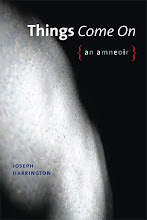
Joseph Harrington - “The History of Sexuality,” A cappella Zoo 4, and "[history becomes fate when]," from Things Come On (forthcoming Wesleyan UP 2011; also in P-Queue 6, p. 113).

Aaron Belz - "Avatar"; and "My Last Duchess," "Regret," "Dial Tone," "My Chiquita," and "Love-Hat Relationship," all in Lovely, Raspberry (Persea 2010).

Susan M. Schultz - "Old Women Look Like This," Honolulu Weekly 7 Apr. 2010 (excerpt in sidebar). Susan publishes Tinfish Books.

K. Silem Mohammad - 2 Sonnagrams: “‘TV Gunfight: Tut, Tut! Tivo Bullfight: Huh, What?’—T. T. Mutt” [from Sonnet 38 (“How can my muse want subject to invent”)], Open Letter 14.2 (2010); and “Uh Huh, Uh Huh: I Dry Fried Air, I Eye a Freed Ferry, I Fry Runny Ray’s IV” [from Sonnet 104 (“To me, fair friend, you never can be old”)], trnsfr 2 (2010).

Steven Schroeder - "Never Loved a Shovel" (title stolen from The Clash); "Get Your Fucking Shinebox" (title stolen from Goodfellas); "Face like a Barndoor" (title stolen from Robert Creeley), forthcoming in The Journal.

Katie Degentesh - "I Wanted to Be Closer to God," from Reasons to Have Sex (working title), some of which will appear in A Public Space 11.

James Belflower - From "Johnny Cash Poems," originally published in Melancholia's Tremulous Dreadlocks (unarchived, alas). For similar work by James, see EOAGH 5 (only it's Blanchot instead of Cash).

Chad Parmenter - "Vivienne Eliot Stands at Her Window to Pray."

Kate Greenstreet - "[He stands beside the body of the man he couldn't help]"; and "suddenly as night," in The Harp & Altar Anthology, ed. Keith Newton and Eugene Lim (2010).

Jorn Ake - "Watching Hogan's Heroes in German," from Boys Whitstling Like Canaries (Eastern Washington UP 2009).

Reb Livingston - "Lament for Fronting," Coconut 14; "Spell for Refunding Her Who Bozoed a Wineglass," No Tell Motel; and "Diminished Prophecy 6:3," Gargoyle 55.

Ben Doller - "[Your ode is too short...]" and "[I wasn't outraged...]," both from FAQ: (Ahsahta 2009).

Jeff T. Johnson - “Separation Anxiety” and “What Was That Again,” Cannibal 5.

Luc Simonic - "Joy at a Truck Stop" (reg. req.); "Giving Up on Poetry at a Young Age" (scroll down).

Amy King -"Necessary Instinct"; and "Brooklyn White Ink Party," Moria.

Thanks to the readers - it was a knockout.

Friday, March 19, 2010

The COUNT-DOWN BEGINS!

It's down to the wire at Up From the Ground - only two more weeks until . . . well, until the first ten months' worth are enshrined forever as a PDF. The blog will continue (apparently). But since the last few posts will be at the beginning of the PDF/MFA, Jen is using them as "introductory" material. So, if you've been wondering what the hell she's doing, now's the time to find out!

Wednesday, March 17, 2010

Alex Chilton is dead

there goes the last vestige of my M'phis youth . . .

Thursday, March 4, 2010

I shall write no more
poems of the flat
declarative statement.
Starting now.
It’ll be great.
I promise.